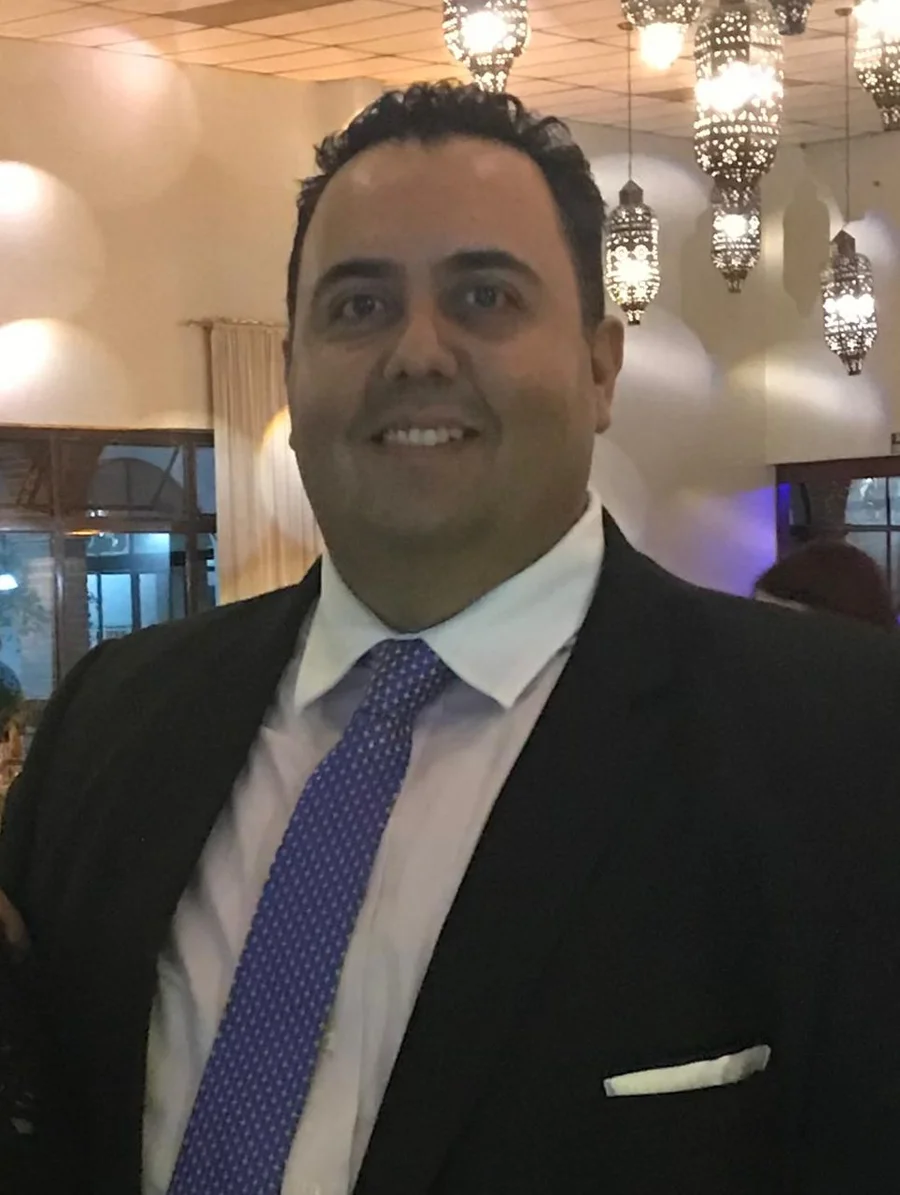
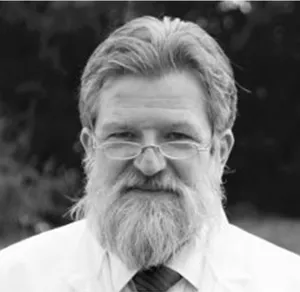
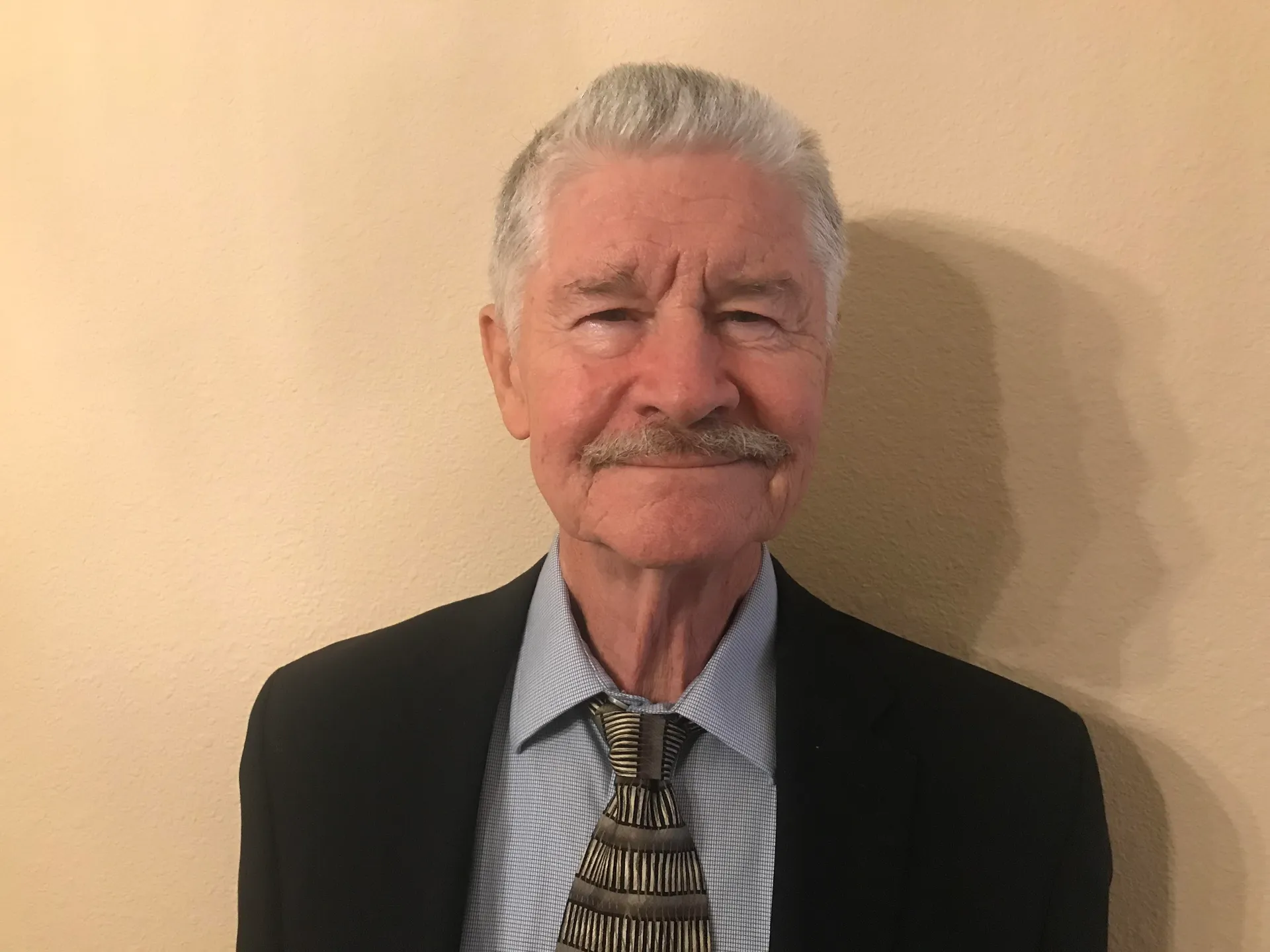
Electronics engineer and inventor named on over 45 patents across medical lasers, DNA sequencers and modifiers, sensor technology and nanotechnology. Since 2008 his company EWMS.scidata.eu, a spin-off of S-C-I DATA, has been a leader in highly energy-efficient DC-DC and solar converters (up to 99.7% efficiency) and in nano and DNA technology.
Career of Patrick R. Linder
The beginning of becoming an electronics technician came in 1972 in Rümikon in the canton of Aargau, when the then eight-year-old Patrick R. Linder earned his pocket money by repairing television sets (tube sets) for the Radio Reinert company in Zurzach. At the end of 1972 he received a microprocessor (INS 8060), called SC/MP, the "Scampi", as a gift from his uncle, Traugot Dätwiler, then head of Swissair Satellite Technology. From this, Patrick Linder built his first microcomputer all by himself, with support from, among other things, the monthly magazine "Hobby".
In 1974, Patrick Linder, now ten years old, had a small company with its premises in the basement of his parents' house in Rümikon. He called his company E.L.P (Elektro Linder & Programs) and created the company logo in the form of an NPN transistor with the letters E. L. P. inserted.
E.L.P.'s first programming assignments included work for Hannes Keller, a well-known diving pioneer at the time: calculations for oxygen using the SC/MP. With the enormous sum of CHF 3,000 that he received for this, Patrick Linder built his first real computer with a microprocessor (INS 8073) from the parts he had collected. It had 32 KB of memory, a huge amount at a time when 4 KB was the norm, and a screen with 24 lines of 40 characters each, when the norm was a display with one line of six numeric characters. As a keyboard he used a mechanically decoded IBM keyboard that his uncle had given him along with an IBM terminal.
In 1976 E.L.P. hired its first employee to visit customers, deliver devices, software and the first chip designs. Patrick Linder worked with this employee as head of E.L.P. for twelve years, in the background, so that no one noticed he was still half a child. The first programs were developed under the first floppy-disk-compatible operating system (CP/M), and in 1978 the first semiconductors were professionally manufactured in Zurzach. This gave birth to S-C-I (System Computer Ing.), whose logo later took the form of a rectangle with the letters "S-C-I DATA", a small nanobot, and the words "Swiss Leader in Nanotechnology".
The first orders for programs and hardware, as well as repairs, came from various vending machine companies (Wurlitzer and others). Only a few people knew who was really behind all the developments. In 1979, S-C-I had ten employees and was managed by a fifteen-year-old.
Many new patents have since been created in the field of nanotechnology that will revolutionize both chip and solar cell technologies. In connection with the former music equipment production in Lehrberg, which had to close as a result of the coronavirus pandemic, new cell and DNA modifiers were developed with specially developed oscillators originally intended for music; these are now in the test phase. A special development using these oscillators is currently being built and tested for the Fraunhofer Institute.
Education and milestones
- 1979: Graduation from secondary school in Zurzach AG.
- 1980: Started an apprenticeship at BBC in Turgi AG as FEAM.
- 1982: Training as a chemist in construction and photo chemistry at Promastic AG and Pancolor AG.
- 1983: Started an apprenticeship as an aircraft mechanic at Frankair in Kloten. Established the company E.L.P. Tronic in Lengnau AG.
- 1984: Discontinued the apprenticeship due to the bankruptcy of Frankair. Opened the subsidiary SYS Tronic in Baden. Training in hybrid production and on the BICAD hybrid system at Binder Elektronik AG.
- 1985: Merger of E.L.P. Tronic, SYS Tronic and S-C-I into the new S-C-I Data in the Waldegg commercial building in Neuenhof. Purchase of the professional router system Meta Design CAE and training on the CAE system at Layprint AG.
- 1986: Supplied Neue Disclean Service AG in Neuenhof with its complete technical equipment (computers and measuring devices). Four-week course for Protel routers.
- 1987: Training in metallurgy and welding technology and on the AutoCAD system.
- 1988: Purchase of the property in Mandach and relocation of the company. Purchase of the new Protel router and subsequent training at Protel.
- 1990: The company's name was changed to "S-C-I DATA Mandach" due to confusion. Protel router upgrade.
- 1991: Purchase of the first version of the MAX software, including programming devices ALL01 and MAX MPU PLMJ 7XXX-84. Three-week course for EPLD MAX 7000 series at ALTERA and ELBATEX.
- 1993: Upgrade to MAX and Protel AUTOTRAX. Exchanged ALL01 for ALL03.
- 1994: Further training in wafer technology at various chip manufacturers.
- 1995: Purchase and release of a new license for the CD-ROM version of MAX+Plus II (ALTERA).
- 1998: Training in sensor technology (customer order).
- 1999: Further training in laser technology (metal processing).
- 2000: Training in diabetology for customer orders.
- 2002: Sold part of his own company due to family circumstances. Started as a laser engineer at Polymed and DNA engineer at Polygene.
- 2008: Left Polymed and Polygene after moving to Germany and starting a new family.
Professional experience and implemented projects
- Development of various special systems (coin acceptors, software) for Wurlitzer and Stöckliautomaten AG.
- ASIC developments for Ferranti and Fairchild.
- Winchester hard disk testing systems for Disclean Service AG.
- Development of the first cash register systems with thermal printer and speech synthesis for Santos (hardware, design and software).
- The complete control system for Betoneisen (a 60 m machine for processing reinforcing iron in reinforced concrete construction).
- The control system for blind slat cutting and folding machines for Storatex and H.R. Grimm.
- Ticket machines, barrier systems and speed cameras for the city police of Baden, Schaffhausen, Winterthur and Zurich, and Sitax AG.
- Software and hardware for Cale Sweden ticket machines.
- Software for traffic lights for Sauber & Gisin.
- Hardware and software for parking facilities for Scheidt & Bachmann.
- Hardware and software for "Multafot" red light and speed cameras (Zellweger Uster, Sitax AG).
- Improvements to access systems for Rena.
- CNC controls and additional systems for Fanuc, Siemens, Brother, Höfliger AG and Premag AG.
- Chip design (on-chip oscillator) for ALTERA.
- Chip card systems, hardware and software, for Nokia, HTS, UBS and Reisat.
- Irdeto and Betacam satellite encryption systems for Reisat AG.
- Data compression systems for Asuda AG.
- FPGA hardware and software (network modem) for Straumann Comm.
- PCB layouts for PSI, Premag AG, H.R. Grimm, Sitax AG and many more.
- Interface for "LSVA" control devices for Autrix AG.
- Autofocus systems for NWL laser systems.
- Lectures to professors on DNA modification and sequences.
- DNA analysis and reading/writing devices for Polygene.
- Blood value sensors for Elrowa AG.
- Computer network systems (hardware and software) for internet and work server systems.
- Special music devices for several well-known manufacturers and his own EWMS® series, plus patent applications for a new special oscillator.
The experience and projects listed are not in chronological order and are by no means complete; they are a selection. EWMS® is a registered trademark of S-C-I DATA Lehrberg.
Developments and patents
Medical laser systems; DNA sequencers and modifiers; sensor technology; surveillance electronics; guided missile electronics; masers (microwave lasers); truecolor laser systems; chip exposure systems below 0.5 nm transistors; CMOS design for below 0.05 V operating voltage; photosynthesis and chemicals; nanotechnology and nanobots; special keyboards, organs, synthesizers and stage equipment; special infra- to ultrasound oscillators.
These developments have resulted in over 45 patents, in most of which Patrick R. Linder is named as the inventor, unless the client requested otherwise.